The conversation surrounding the future of work has evolved from speculative fiction to an urgent boardroom and policy agenda. At the heart of this transformation lie two interconnected forces: Automation and Artificial Intelligence (AI). No longer confined to repetitive factory tasks, these technologies are reshaping cognitive, creative, and service-oriented roles, promising a tectonic shift in how we define jobs, skills, and productivity. This comprehensive analysis delves beyond the headlines of job displacement to explore the nuanced landscape of human-machine collaboration, the emergent roles of the future, and the critical strategies individuals and societies must adopt to not just survive but thrive in the coming decades.
Understanding the Technological Drivers: Beyond Simple Robots
To grasp the future, we must first understand the capabilities of current and near-future technologies. Automation and AI, while often used interchangeably, represent different spectrums of change.
A. Advanced Robotic Process Automation (RPA): This is the evolution of basic automation. Modern RPA can handle structured digital tasks processing invoices, managing payroll, data entry with high accuracy and speed. It acts as a “digital workforce” that operates 24/7, freeing human workers from monotonous, rule-based digital chores.
B. Cognitive AI and Machine Learning (ML): This represents the true paradigm shift. Unlike traditional software, ML systems learn from vast datasets, identify patterns, and make predictions or decisions. This enables applications like:
-
Natural Language Processing (NLP): Powering advanced chatbots, real-time translation, sentiment analysis of customer feedback, and sophisticated content generation.
-
Computer Vision: Enabling quality control in manufacturing that surpasses human sight, diagnosing medical images, and powering autonomous vehicles.
-
Predictive Analytics: Optimizing supply chains, forecasting market trends, and personalizing customer recommendations with unprecedented precision.
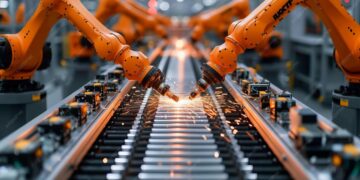
C. Collaborative Robotics (Cobots): These are robots designed to work alongside humans, not replace them. Equipped with sensors for safety, they assist with physically demanding tasks—lifting heavy components in a warehouse, performing precise movements in surgery—augmenting human strength and endurance.
D. Generative AI: The latest frontier, encompassing tools that create novel content—text, code, images, music—based on prompts. This democratizes creative and analytical prowess, making complex drafting, design, and programming accessible to a broader range of professionals.
The Dual-Edged Sword: Job Displacement vs. Job Creation
The fear of mass unemployment is the most visceral reaction to AI and automation. This concern is valid for certain roles, but history suggests a more complex outcome of destruction, transformation, and creation.
A. Roles at Higher Risk of Automation: Jobs primarily consisting of predictable, repetitive tasks are most susceptible. This includes data collection and processing, routine customer service, certain aspects of clerical work, and manual, predictable physical activities in manufacturing and logistics.
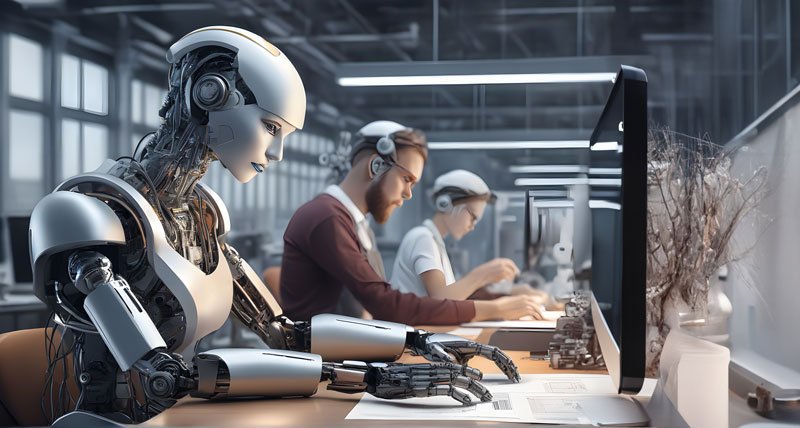
B. The Creation of New Job Categories: Technology historically creates more jobs than it destroys, albeit different ones. Future roles will center on managing, interpreting, and complementing AI. We can anticipate demand for:
-
AI Trainers and Ethicists: Individuals who curate data, fine-tune algorithms, and ensure AI systems operate fairly, transparently, and without bias.
-
Human-Machine Collaboration Managers: Specialists who design workflows where humans and AI systems interact seamlessly, maximizing the strengths of both.
-
Cybersecurity Resilience Experts: As systems become more interconnected and autonomous, protecting them from sophisticated threats becomes paramount.
-
Personalized Service Curators: In healthcare, education, and wellness, professionals who use AI-derived insights to deliver hyper-personalized human care and coaching.
-
Green Technology and Sustainability Engineers: Solving the climate crisis will require new technologies and systems, creating vast fields of employment.
C. The Transformation of Existing Professions: Most jobs will not vanish but will be radically altered. A marketer will use AI for analytics and content ideation but will apply human creativity for strategy and brand storytelling. A doctor will use AI for diagnostic support but will provide empathy, complex judgment, and patient communication. The core of the profession remains, but the toolset and daily tasks evolve.
The Critical Shift: Essential Skills for the AI-Augmented Workplace
As routine tasks are automated, the value of distinctly human skills will skyrocket. The future workforce must cultivate a blend of technological literacy and deep human-centric abilities.
A. Technological and Digital Fluency: This does not mean everyone must be a coder. It means understanding how AI and data work, how to interact with AI tools effectively, and possessing a comfort level with digital platforms. Data literacy—the ability to read, analyze, and question data—becomes as fundamental as traditional literacy.
B. Cognitive and Meta-Skills:
-
Critical Thinking and Complex Problem-Solving: The ability to assess information from AI, identify flaws in logic, and solve novel, non-routine problems.
-
Creativity and Innovation: Conceptualizing new ideas, approaches, and artistic expressions that are beyond the derivative capacity of current AI.
-
Systems Thinking: Understanding how different parts of an organization or process interconnect, seeing the bigger picture that AI might segment.
C. Social and Emotional Intelligence (EQ): Machines cannot replicate authentic human connection. Skills like empathy, persuasion, negotiation, mentorship, and providing emotional support will be irreplaceable in leadership, sales, caregiving, and team management.
D. Adaptability and Lifelong Learning (Learnability): The half-life of skills is shrinking. The mindset of being a perpetual learner, willing to continuously upskill and reskill, is the single greatest career insurance policy.
Strategic Imperatives for Organizations and Leaders
Businesses that successfully navigate this transition will not simply implement technology; they will redesign their culture and operations around human-AI synergy.
A. Adopting an Augmentation Mindset: Move beyond automation-for-efficiency to augmentation-for-innovation. The strategic question should be: “How can AI augment our employees to make them more creative, strategic, and effective?” This focuses on elevating the workforce rather than just reducing it.
B. Investing in Continuous Reskilling: Companies must take an active, funded role in the continuous education of their employees. This includes partnerships with online learning platforms, creating internal “academies,” and providing dedicated time for skill development. It is an investment in agility and talent retention.
C. Redesigning Workflows and Organizational Structures: Hierarchical, siloed structures will hinder collaboration with fluid AI systems. Organizations need to become more networked, project-based, and flexible. Workflow design must explicitly allocate tasks to humans, machines, or both in collaboration.
D. Prioritizing Ethical AI and Transparency: Establishing clear governance for AI use is critical. This includes audit trails for algorithmic decisions, commitment to mitigating bias in training data, and transparent communication with employees and customers about how AI is used. Trust is a key competitive advantage.
Policy and Societal Considerations: Building an Inclusive Future
The societal impact of this shift requires proactive and thoughtful policy to avoid exacerbating inequality and social unrest.
A. Rethinking Education Systems: Curricula must shift from rote memorization to fostering critical thinking, creativity, and emotional intelligence. STEM education is vital, but must be integrated with ethics, philosophy, and communication (often called STEAM). Vocational training needs constant updating to remain relevant.
B. Exploring Safety Nets and New Models: Concepts like Universal Basic Income (UBI), portable benefits tied to individuals rather than jobs, and strengthened unemployment insurance for transitional periods are serious topics of debate. They aim to provide stability amidst labor market churn.
C. Facilitating Just Transitions: Policies must support workers in declining industries through robust retraining programs, relocation assistance, and wage insurance. This is both an economic and moral imperative to ensure the benefits of AI are widely shared.
D. Global Cooperation on Standards: Issues like data privacy, AI ethics, and the cross-border movement of digital workers require international frameworks and cooperation to prevent a “race to the bottom” and ensure responsible global development of these powerful technologies.
Conclusion: Embracing a Symbiotic Future
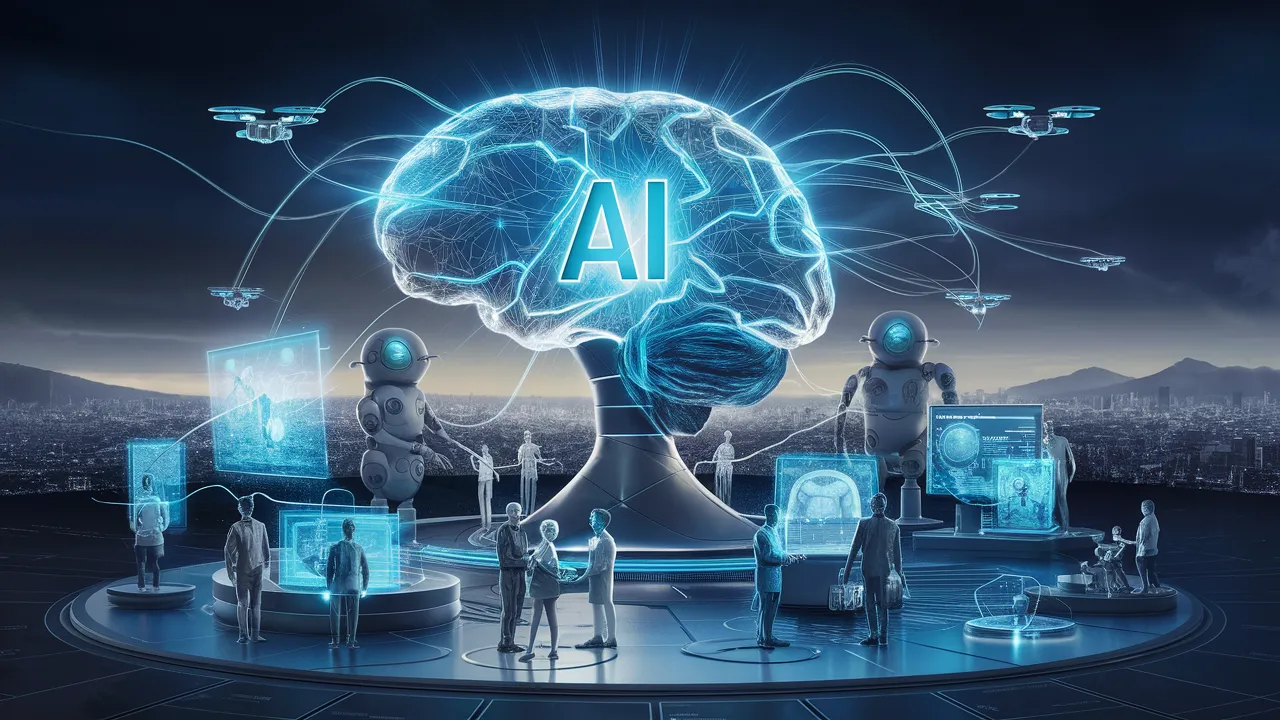
The future of work driven by automation and AI is not a predetermined dystopia or utopia. It is a spectrum of possibilities that we collectively shape through the choices we make today in our personal skill development, our organizational strategies, and our public policies. The goal is not to compete with machines but to excel in areas where we are uniquely human: creativity, strategic insight, ethical judgment, and compassionate connection. By embracing a mindset of symbiotic partnership with technology, we can steer towards a future where AI handles the mundane, the repetitive, and the data-intensive, thereby liberating human potential to tackle our greatest challenges, innovate beyond current imagination, and create more meaningful and fulfilling forms of work. The era of human-machine collaboration is not on the horizon; it is already here. Our task is to navigate it with intention, wisdom, and an unwavering focus on human-centric values.