
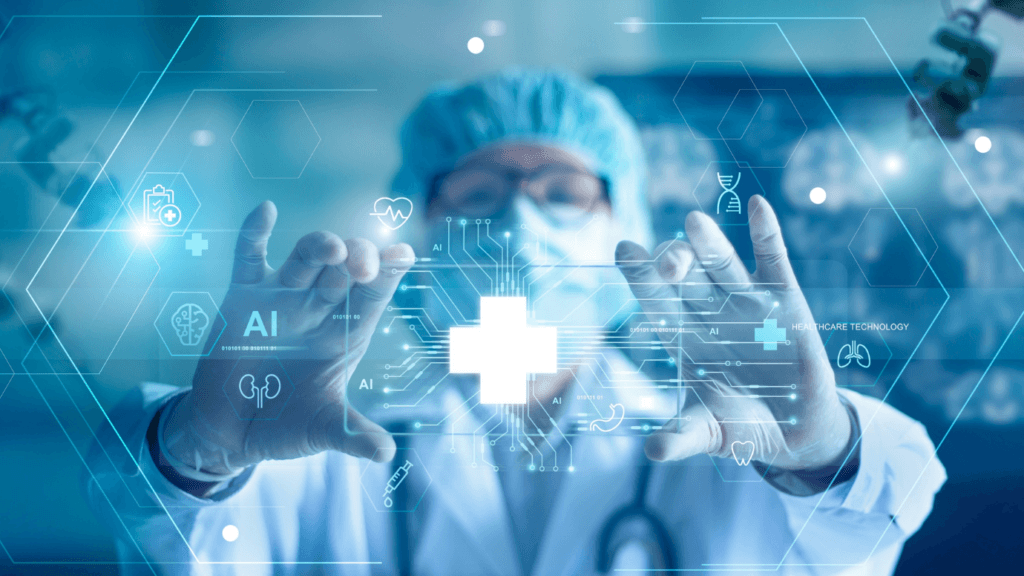
The global healthcare landscape is undergoing a profound and irreversible transformation, driven by the relentless advancement of Artificial Intelligence (AI). No longer confined to the realms of science fiction, AI has emerged as a pivotal force in medical diagnosis, enhancing the precision, speed, and accessibility of healthcare services worldwide. This technological revolution is not merely about automating tasks; it is about augmenting human expertise, uncovering insights hidden within vast data oceans, and fundamentally reshaping the patient journey from symptom onset to treatment. As health systems grapple with aging populations, physician shortages, and escalating costs, AI stands as a critical ally. This comprehensive exploration delves into how AI is revolutionizing medical diagnostics across the globe, detailing its core technologies, diverse applications, tangible benefits, prevailing challenges, and the promising horizon of a more equitable and efficient healthcare future for all.
A. Core Technologies Powering Diagnostic AI
The remarkable capabilities of diagnostic AI are built upon a foundation of sophisticated, interconnected technologies.
A. Machine Learning (ML) and Deep Learning: At the heart of most diagnostic AI lies ML, where algorithms learn patterns from large datasets without explicit programming. A subset, Deep Learning, uses artificial neural networks with multiple layers (hence “deep”) to process data. Convolutional Neural Networks (CNNs), for instance, are exceptionally adept at analyzing visual imagery, making them ideal for scanning radiology slides, retinal images, and pathological samples, often identifying subtleties invisible to the human eye.
B. Natural Language Processing (NLP): This technology enables AI to understand, interpret, and generate human language. In diagnostics, NLP algorithms scour unstructured clinical notes, physician narratives, research papers, and patient histories to extract relevant information, identify symptom patterns, suggest potential diagnoses, and ensure critical findings are not buried in text.
C. Computer Vision: Specifically tailored for deriving information from visual inputs, computer vision is the “eyes” of AI in medicine. It empowers systems to analyze medical images—X-rays, MRIs, CT scans, ultrasounds, and dermatology photos—with superhuman consistency, detecting anomalies such as tumors, fractures, or hemorrhages.
D. Predictive Analytics: By integrating and analyzing data from electronic health records (EHRs), genomic sequencing, wearable devices, and population health databases, AI models can predict individual patient risks. This includes forecasting the likelihood of developing diseases like diabetes or heart failure, predicting patient deterioration in ICUs, or estimating readmission risks, enabling proactive, preventive care.
B. Global Applications Reshaping Diagnostic Pathways
The implementation of AI-driven diagnostics is creating tangible impact across numerous medical specialties and care settings around the world.
A. Radiology and Medical Imaging: AI has found one of its most mature applications here. Algorithms act as powerful second readers, prioritizing critical cases (like a potential stroke on a CT scan), measuring tumor volumes with precision over time, and detecting early signs of conditions such as pneumonia, breast cancer via mammography, or lung nodules. This reduces radiologist workload and minimizes diagnostic oversights.
B. Pathology and Histopathology: AI is revolutionizing the analysis of tissue biopsies and cytology samples. By digitizing slides, AI models can identify cancerous cells, classify cancer subtypes, and even predict genetic mutations from histology images alone, guiding targeted therapy decisions faster and with remarkable accuracy.
C. Ophthalmology: AI systems are successfully deployed to screen for diabetic retinopathy, age-related macular degeneration, and glaucoma by analyzing retinal fundus photographs. These tools provide accessible screening in remote or underserved areas, preventing preventable blindness through early intervention.
D. Cardiology: AI aids in interpreting electrocardiograms (ECGs), echocardiograms, and cardiac MRI scans. It can detect arrhythmias like atrial fibrillation from wearable ECG monitors, assess ejection fraction automatically, and predict cardiovascular events by analyzing subtle patterns in data that elude conventional analysis.
E. Neurology and Psychiatry: In neurology, AI assists in early diagnosis of Alzheimer’s by analyzing brain scans and speech patterns. For psychiatry, algorithms are being developed to analyze speech, language use in clinical interviews, and even social media behavior to support the assessment of conditions like depression, anxiety, and PTSD, offering objective biomarkers.
F. Genomics and Personalized Medicine: AI accelerates the analysis of complex genomic data. It helps identify disease-causing genetic variants, predict patient responses to specific drugs (pharmacogenomics), and tailor personalized treatment plans based on an individual’s unique genetic makeup, moving medicine from a one-size-fits-all to a personalized paradigm.
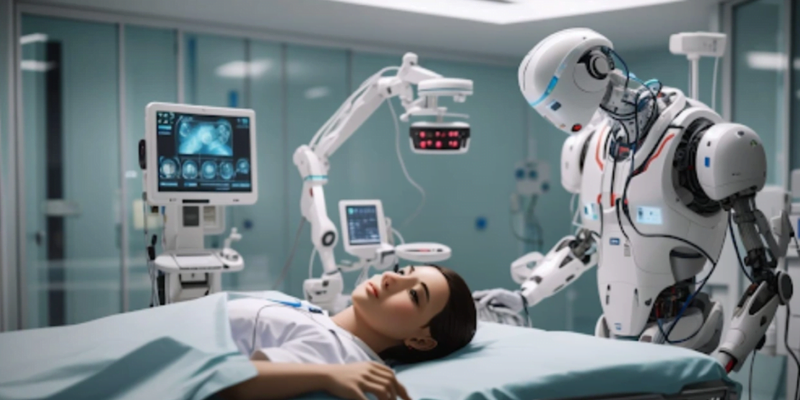
C. The Multifaceted Benefits: Why AI is a Game-Changer
The integration of AI into diagnostics delivers a compelling array of advantages for patients, providers, and health systems.
A. Unprecedented Accuracy and Reduced Error Rates: AI algorithms, trained on millions of data points, achieve diagnostic accuracy rates that meet or surpass human experts in specific, well-defined tasks. They are immune to fatigue, distraction, or cognitive bias, leading to a significant reduction in diagnostic errors, which are a major source of preventable patient harm globally.
B. Enhanced Speed and Efficiency: AI can analyze complex images or datasets in seconds, dramatically accelerating the diagnostic timeline. This “time-to-diagnosis” is critical in emergencies like stroke or sepsis, where minutes saved can drastically improve patient outcomes and survival rates.
C. Increased Accessibility and Democratization of Care: Through cloud-based AI tools accessible via smartphones or basic computers, high-quality diagnostic expertise can be extended to rural clinics, low-resource settings, and developing nations. This helps bridge the healthcare gap, allowing patients everywhere to benefit from specialist-level analysis without geographical constraints.
D. Proactive and Preventive Healthcare Shift: Predictive AI models facilitate a transition from reactive sickness care to proactive health management. By identifying high-risk individuals early, healthcare providers can implement lifestyle interventions, monitoring, and preventive treatments long before a disease becomes symptomatic or advanced.
E. Alleviation of Clinician Burnout: By automating routine analysis, triaging cases, and handling administrative documentation, AI reduces the cognitive burden on doctors and specialists. This allows them to focus more on complex cases, patient communication, and clinical decision-making, improving job satisfaction and mitigating widespread burnout.
D. Navigating Challenges and Ethical Considerations
Despite its promise, the widespread adoption of diagnostic AI faces significant hurdles that must be thoughtfully addressed.
A. Data Quality, Bias, and Generalizability: AI models are only as good as the data they are trained on. Biased, non-representative, or poor-quality data can lead to algorithms that perform poorly for underrepresented ethnic groups, genders, or populations. Ensuring diverse, high-fidelity, and ethically sourced data is paramount for building equitable AI.
B. The “Black Box” Problem and Explainability: Many advanced AI models, particularly deep learning networks, are opaque in their decision-making process. For clinicians to trust and act upon an AI’s diagnosis, they need understandable explanations a field known as Explainable AI (XAI). Developing transparent models is crucial for clinical adoption and medico-legal accountability.
C. Regulatory and Validation Hurdles: Regulatory bodies like the FDA (U.S.) and EMA (Europe) are evolving frameworks for approving AI-based medical devices. The challenge is keeping pace with algorithms that can learn and adapt over time. Rigorous clinical validation in real-world settings, not just controlled studies, is essential to prove safety and efficacy.
D. Integration into Clinical Workflows: Successful implementation requires seamless integration with existing hospital IT infrastructure, EHR systems, and clinician workflows. Poorly designed interfaces or disruptive processes can lead to resistance from staff and hinder the technology’s potential benefits.
E. Data Privacy, Security, and Ownership: The use of vast amounts of sensitive patient data raises serious concerns about privacy breaches and cybersecurity. Clear policies on data anonymization, secure storage, patient consent, and data ownership are non-negotiable prerequisites for maintaining public trust.
F. Impact on the Medical Profession: Fears of AI replacing radiologists or pathologists persist, though the prevailing consensus is that AI will augment, not replace, these professionals. The focus must shift to re-skilling and defining new roles where human judgment, empathy, and complex decision-making integrate with AI’s analytical power.
E. The Future Horizon: Integrating AI into Holistic Care
The future of AI in diagnosis is not an endpoint but a continuum leading towards more integrated, intelligent, and patient-centric health ecosystems.
A. Multimodal AI Systems: Future platforms will not rely on a single data type. They will fuse imaging, genomics, proteomics, EHR data, and real-time biometrics from wearables to generate a comprehensive “digital phenotype” for each patient, offering a holistic diagnostic assessment far beyond current capabilities.
B. Continuous and Ambient Monitoring: AI, coupled with IoT devices and ambient sensors, will enable continuous health monitoring at home. This will facilitate early detection of anomalies in chronic disease management or post-operative recovery, making diagnosis a continuous process rather than an episodic event.

C. AI-Enhanced Point-of-Care Diagnostics: Portable, AI-powered devices (e.g., smartphone attachments for skin lesion analysis or ultrasound probes) will bring sophisticated diagnostics directly to the patient’s bedside, in ambulances, or in remote field clinics, revolutionizing frontline medicine.
D. Global Collaborative Networks: Federated learning a technique where AI models are trained across multiple decentralized devices or servers without sharing raw data will enable global collaboration. This allows institutions worldwide to contribute to building robust AI models while preserving patient privacy, accelerating innovation for rare diseases and global health challenges.
Conclusion: A Collaborative Path Forward
The AI revolution in global healthcare diagnosis is unequivocally underway, offering a powerful toolkit to tackle some of medicine’s most persistent challenges. From enhancing the accuracy of image interpretation to enabling predictive, personalized care, its potential to save lives and improve outcomes is immense. However, realizing this potential in full requires a careful, collaborative, and ethical approach. Technologists, clinicians, ethicists, regulators, and patients must work in concert to navigate the challenges of bias, transparency, and integration. By fostering trust, ensuring equity, and focusing on augmentation over automation, we can steer this transformation toward a future where AI empowers every healthcare professional and delivers timely, accurate, and accessible diagnostics to every patient on the planet, irrespective of location or economic status. The diagnosis for healthcare’s future, with AI as a core partner, is decidedly hopeful.