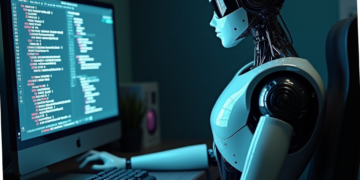
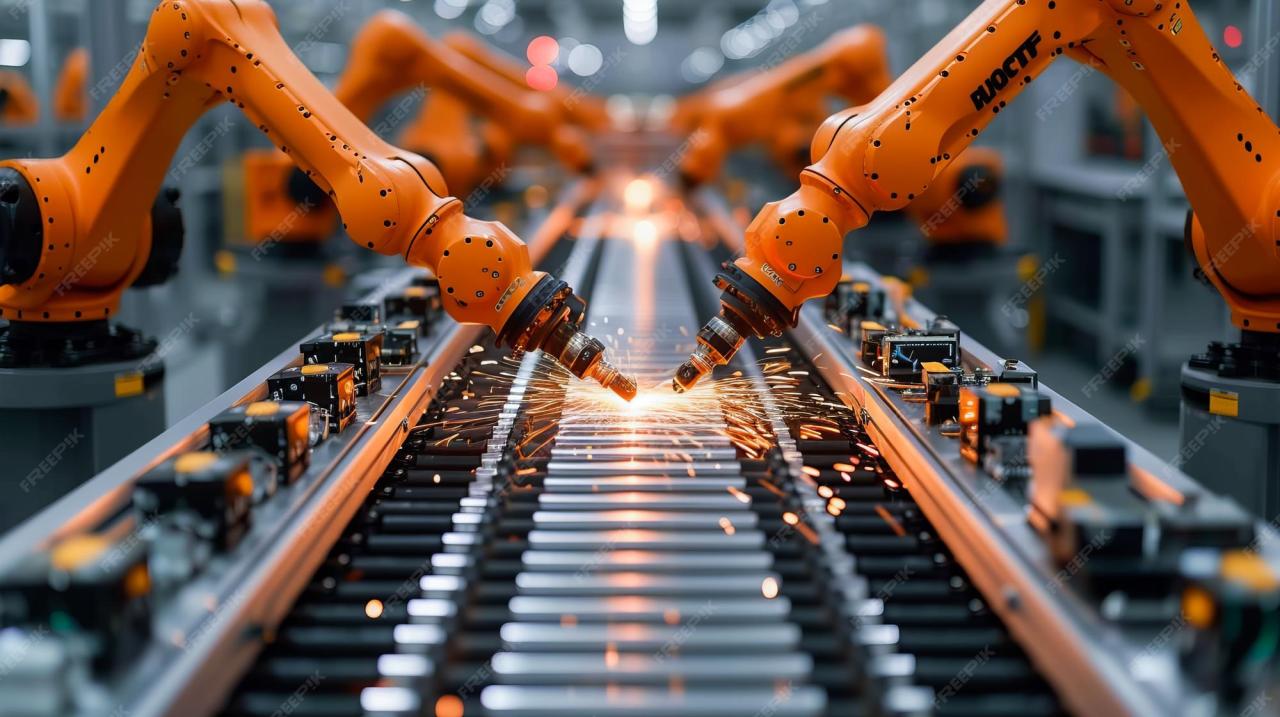
The manufacturing landscape is undergoing a seismic shift, propelled from the era of mechanization and assembly lines into the age of intelligent automation. At the forefront of this industrial metamorphosis are robotics, which have evolved from simple, caged machines performing repetitive tasks into sophisticated, collaborative partners integral to the factory ecosystem. This transformation is not merely about replacing human labor; it’s about augmenting capabilities, unlocking unprecedented levels of efficiency, precision, and flexibility. The integration of robotics into manufacturing processes represents a fundamental rewrite of production playbooks, enabling industries to respond dynamically to global market demands, supply chain complexities, and the relentless pursuit of quality. This comprehensive analysis delves into the multifaceted ways robotics are revolutionizing manufacturing, exploring the technologies driving change, the tangible benefits realized, the challenges addressed, and the future trajectory of the human-robot collaborative workspace.
The Evolution and Core Technologies Powering Industrial Robotics
The journey of industrial robotics began with Unimate in the 1960s, a rudimentary arm tasked with die-casting and spot welding. Today’s robots are a testament to decades of innovation, converging multiple advanced technologies.
A. Advanced Mobility and Dexterity: From Fixed Arms to Agile Mobile Robots
Modern robotic systems are no longer anchored to a single spot. Autonomous Mobile Robots (AMRs) and Automated Guided Vehicles (AGVs) navigate factory floors using sophisticated sensors, LiDAR, and mapping software, transporting materials autonomously and optimizing logistics. Simultaneously, robotic arms have gained enhanced dexterity through improved actuators and end-of-arm tooling (EOAT), allowing them to handle tasks from delicate electronics assembly to heavy-duty palletizing with equal finesse.
B. The Sensory Revolution: Computer Vision and Force Sensing
The integration of 2D and 3D vision systems has given robots “sight,” enabling precise object recognition, quality inspection, and bin-picking from unstructured piles. Coupled with force-torque sensors, robots can now perform tasks requiring a “touch,” such as polishing, assembling parts with tight tolerances, or handling fragile items, adjusting their movements in real-time based on sensory feedback.
C. The Brainpower: Artificial Intelligence and Machine Learning
This is the cornerstone of the next generation of robotics. AI and Machine Learning (ML) algorithms allow robots to move beyond pre-programmed paths. They can learn from data, optimize processes, predict maintenance needs, and adapt to variations in their environment. Deep learning, particularly, enhances vision systems for defect detection with superhuman accuracy.
D. Collaborative Robotics (Cobots): The New Coworkers
A paradigm shift in human-robot interaction, cobots are designed to work safely alongside human workers without the need for extensive safety caging. They are typically easier to program, often via intuitive hand-guiding, and are deployed for tasks that require human judgment complemented by robotic consistency and strength, such as machine tending, assembly, and packaging.
E. The Digital Thread: Integration with IoT and Cloud Computing
Robots are now key data-generating nodes in the Industrial Internet of Things (IIoT) ecosystem. Connected to the cloud, they provide real-time performance data, enabling predictive analytics, remote monitoring, and fleet management. This connectivity allows for digital twins—virtual replicas of robotic systems—to simulate, optimize, and deploy programs offline before physical implementation.
Comprehensive Impact: How Robotics Transform Key Manufacturing Pillars
The application of these technologies is delivering transformative outcomes across every facet of manufacturing.
A. Unmatched Productivity and Operational Efficiency
Robots operate 24/7 without fatigue, significantly increasing throughput. They accelerate cycle times and enable lights-out manufacturing in certain sectors, where production continues fully autonomously in darkened facilities. This constant uptime directly translates to higher output and better utilization of capital assets.
B. Elevated Quality and Consistency to Near-Zero Defects
Human error is a natural variable in production. Robotics eliminate this inconsistency. Every weld, cut, paint stroke, or assembly step is performed with identical precision, drastically reducing variance and scrap rates. AI-powered vision systems provide 100% inline inspection, catching microscopic defects imperceptible to the human eye.
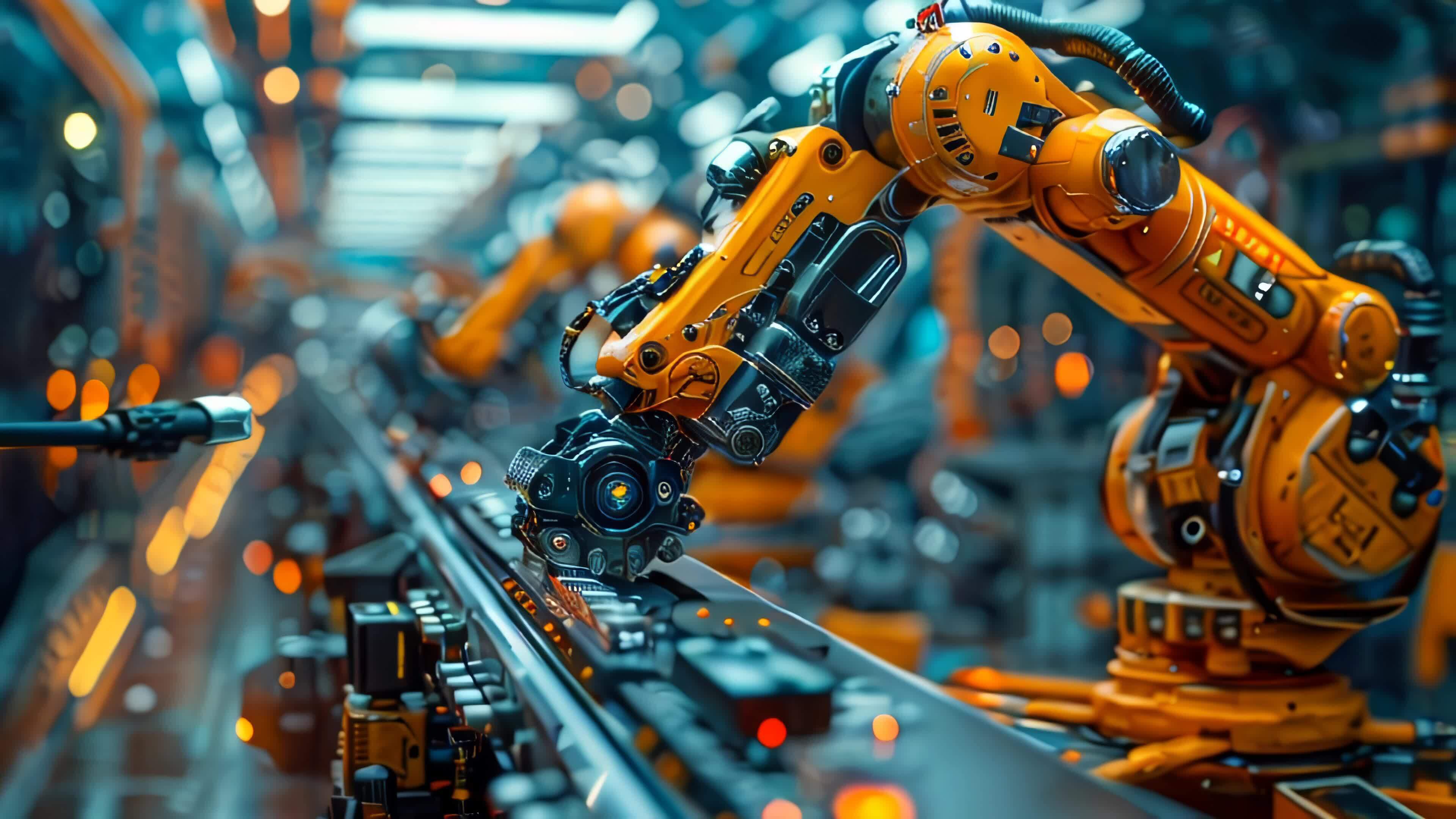
C. Unprecedented Flexibility and Mass Customization
The market increasingly demands personalized products. Traditional assembly lines struggled with this. Modern, software-driven robots can be quickly reprogrammed and equipped with new tools to switch between product variants. This agility supports batch-size-one production, allowing manufacturers to offer customization without sacrificing efficiency.
D. Enhanced Workplace Safety and Ergonomics
Robots excel at handling the “3D” jobs: those that are Dull, Dirty, and Dangerous. They take over tasks involving hazardous materials, extreme temperatures, heavy lifting, or repetitive motions that lead to ergonomic injuries. This not only reduces workplace accidents but also frees human workers to focus on more cognitive, value-added roles.
E. Data-Driven Insights and Smarter Factories
Every robotic movement generates data. This data stream, analyzed through AI, provides deep insights into production bottlenecks, maintenance schedules, and process optimization opportunities. Robotics are thus the physical enablers of the Smart Factory, where data informs continuous improvement in a closed-loop system.
F. Resilience in Supply Chains and Labor Markets
In an era of global disruptions, robotics offer a buffer. They enable reshoring or nearshoring of production by offsetting higher labor costs in developed economies with superior efficiency. Furthermore, they mitigate dependencies on fluctuating labor availability, providing operational stability.
Addressing Challenges and Strategic Implementation
Adopting robotics is not without its hurdles. A strategic approach is crucial for success.
A. Navigating High Initial Capital Investment
The upfront cost for robotic systems, integration, and programming can be substantial. However, the focus should be on Total Cost of Ownership (TCO) and Return on Investment (ROI). Reduced labor costs, lower scrap rates, higher yield, and minimized downtime often lead to payback periods of less than two years. Flexible leasing models and Robotics-as-a-Service (RaaS) are emerging to lower entry barriers.
B. Bridging the Skills Gap and Workforce Transition
The demand for new skill sets robot programming, maintenance, data analysis, and systems integrationis soaring. Successful implementation requires upskilling the existing workforce. Companies must invest in training programs to transition workers from manual tasks to supervisory, programming, and maintenance roles, fostering a culture of human-robot collaboration rather than replacement.
C. Ensuring Cybersecurity in Connected Environments
A connected robot is a potential cyber vulnerability. Securing robotic networks from unauthorized access and malware is paramount. This involves implementing firewalls, regular security patches, network segmentation, and adherence to industrial cybersecurity standards like IEC 62443.
D. Achieving Seamless System Integration
Integrating robots with legacy machinery, Enterprise Resource Planning (ERP), and Manufacturing Execution Systems (MES) can be complex. Partnering with experienced system integrators and opting for open-architecture platforms that support standard communication protocols (like OPC UA) is essential for creating a cohesive ecosystem.
The Future Horizon: Emerging Trends in Manufacturing Robotics
The robotic revolution is accelerating, with several trends defining its future.
A. Artificial Intelligence as the Core Differentiator
AI will move from an add-on to the core operating system of robots. We will see increased use of reinforcement learning, where robots teach themselves optimal methods for complex tasks through trial and error in simulation environments.
B. Hyper-Automation and the Fully Autonomous Factory
The convergence of robotics with other technologies like 5G (for ultra-low latency communication), edge computing, and blockchain (for secure, traceable production logs) will push hyper-automation. This vision entails fully self-optimizing factories where different robotic systems communicate and collaborate with minimal human intervention.
C. Advanced Human-Robot Collaboration (HRC)
Future cobots will feature more advanced contextual awareness, using natural language processing and gesture recognition for more intuitive interaction. Wearable exoskeletons will also augment human workers, creating a synergistic hybrid workforce.

D. Sustainability and the Green Factory
Robotics contribute significantly to sustainability. They optimize material usage, reduce energy consumption through efficient movements, and enable precise application of coatings and adhesives, minimizing waste. This supports manufacturers’ environmental, social, and governance (ESG) goals.
Conclusion
The transformation brought by robotics in manufacturing is profound and irreversible. It represents a shift from rigid, linear production to dynamic, intelligent, and adaptive creation. While challenges in investment, integration, and workforce development persist, the strategic benefits superior quality, resilient operations, empowered human workers, and the capacity for innovation are undeniable. Manufacturers who embrace this robotic revolution, viewing automation as a collaborative tool rather than a mere replacement, are poised to lead in competitiveness, agility, and innovation. The factory of the future is not a fully human-less space, but a brilliantly orchestrated symphony of human ingenuity and robotic precision, building a smarter, safer, and more efficient world of making.