
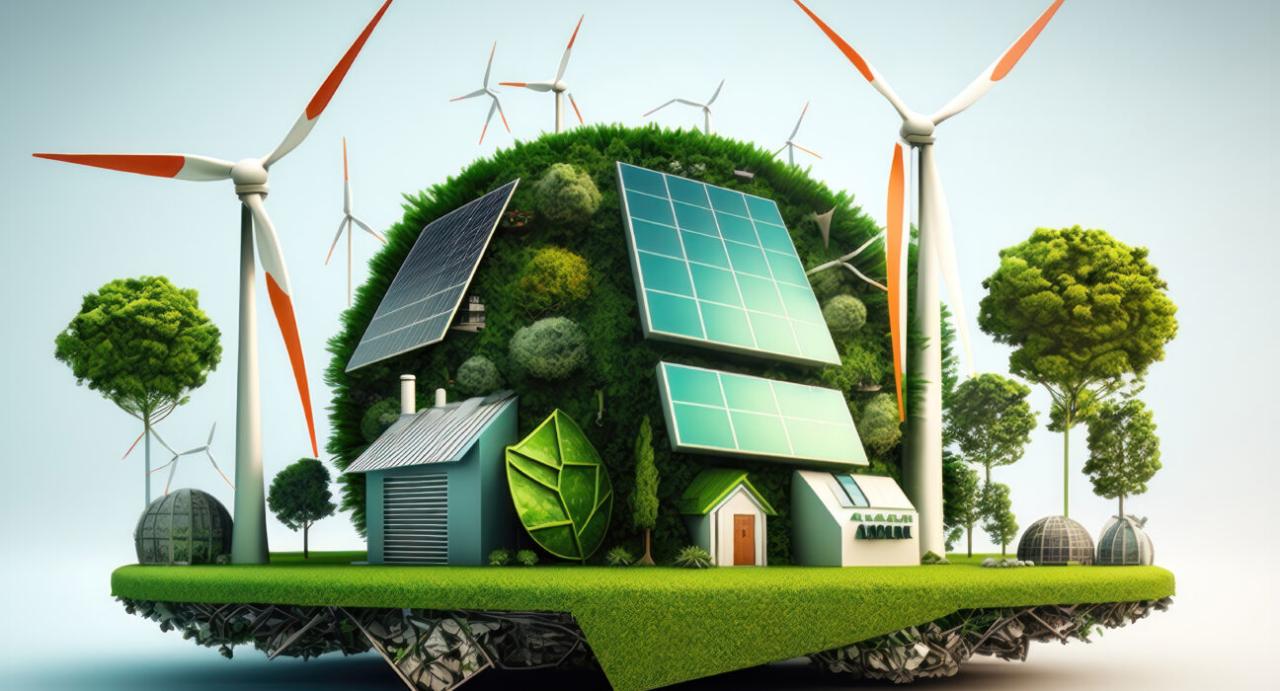
In an era defined by climate urgency and geopolitical energy shifts, the transition to sustainable power sources is no longer a niche ambition but a global imperative. Green energy technology has evolved from simple, alternative concepts to sophisticated, high-efficiency systems that are steadily outcompeting fossil fuels on both cost and reliability. This transformation is being driven by a wave of groundbreaking innovations that promise not only to decarbonize our grids but to fundamentally reshape how we generate, store, and consume energy. This article delves into seven pivotal technological frontiers where these advancements are making a tangible impact, paving the way for a cleaner, more resilient, and energy-abundant future.
The global push for net-zero emissions has catalyzed unprecedented investment and creativity in the energy sector. Beyond the familiar sight of solar panels and wind turbines lies a complex ecosystem of innovation involving advanced materials, artificial intelligence, and novel engineering principles. These technologies are interconnected, each solving critical bottlenecks for the others, creating a synergistic acceleration toward a fully renewable energy landscape. From harnessing the profound power of the sun in new ways to tapping into the Earth’s own heat and the motion of its oceans, the horizon of possibility is expanding rapidly. Let us explore these key innovations that are turning the vision of a 100% green energy future into an achievable reality.
A. Perovskite Solar Cells: Revolutionizing Photovoltaic Efficiency
Traditional silicon-based solar panels have dominated the market for decades, but their efficiency is approaching theoretical limits. Enter perovskite solar cells, a breakthrough that is poised to redefine solar technology. Perovskites are a class of materials with a unique crystalline structure that excels at absorbing light and converting it into electricity.
The advantages of this technology are multifold:
A. Exceptional Efficiency Gains: Laboratory-scale perovskite cells have achieved efficiencies over 25%, rivaling and even surpassing the best silicon cells, and they have the potential to reach much higher. More compellingly, in tandem configurations (perovskite-on-silicon), they can utilize a broader spectrum of sunlight, pushing combined efficiencies beyond 33%.
B. Flexibility and Versatility: Unlike rigid silicon wafers, perovskite films can be fabricated to be lightweight, semi-transparent, and flexible. This opens applications far beyond rooftops and solar farms—think integrated building materials (BIPV), solar windows, vehicle-integrated charging, and portable power for devices.
C. Lower Production Costs: The manufacturing process for perovskites can be significantly cheaper. It often involves solution-based techniques like printing or coating, which require less energy-intensive processing than the high-temperature purification needed for silicon.
However, the journey to mass commercialization faces a critical hurdle: long-term stability. Early perovskite cells degraded quickly when exposed to moisture, heat, and UV light. Intensive research is yielding solutions through improved encapsulation techniques, compositional engineering (mixing different ions), and novel device architectures. Major industry players are now investing heavily to solve these durability challenges, anticipating a new generation of ultra-efficient, versatile, and affordable solar power within this decade.
B. Next-Generation Wind Power: Beyond the Traditional Turbine
Wind energy is a mature pillar of renewables, but innovation is far from stagnant. The focus has shifted toward maximizing energy capture, reducing costs, and accessing untapped wind resources, particularly offshore.
Key advancements are emerging in several areas:
A. Floating Offshore Wind Turbines: Traditional offshore wind is fixed to the seabed, limiting deployment to shallow waters. Floating platforms, anchored by mooring lines, allow wind farms to be installed in deep, open waters where winds are stronger and more consistent. This unlocks vast new territories for energy production, especially along continental coasts.
B. Advanced Blade Design and Materials: Utilizing artificial intelligence for aerodynamic optimization and new materials like thermoplastic composites, blades are becoming longer, lighter, and more durable. Some designs even incorporate biomimicry, inspired by the flexible efficiency of hummingbird wings. Furthermore, recyclable blade materials are being developed to address end-of-life waste concerns.
C. Aerial Wind Energy Systems (AWES): This radical concept eliminates the tower altogether. It involves devices like large kites, drones, or airborne turbines that fly at high altitudes (over 500 meters) where winds are significantly more powerful and steady. These systems use tethers to transmit mechanical or electrical energy to the ground, offering a potential step-change in material use and energy yield per unit of investment.
These innovations collectively aim to increase the capacity factor of wind power, making it an even more reliable and dominant baseload energy source for national grids.

C. Grid-Scale Energy Storage: The Key to Renewable Reliability
The intermittent nature of solar and wind power is their most cited challenge. The solution lies in advanced, large-scale energy storage that can store surplus generation for use during calm or dark periods. While lithium-ion batteries dominate the conversation for short-duration storage, other technologies are crucial for long-duration needs.
A comparative analysis of promising grid-scale storage solutions includes:
A. Flow Batteries: Unlike conventional batteries, flow batteries store energy in liquid electrolytes housed in external tanks. Scaling storage capacity simply requires larger tanks. Vanadium redox flow batteries are leading this category, offering excellent longevity (20+ years), deep-cycling capability without degradation, and inherent safety. Their decoupled power and energy ratings make them ideal for storing wind and solar energy for 4-12 hours.
B. Gravity-Based Storage: This method uses the potential energy of mass. Pumped Hydro Storage (PHS) is the incumbent champion, using two water reservoirs at different elevations. Advanced Gravity Storage (AGS) concepts, like Energy Vault’s system, use automated cranes to stack and lower composite bricks, converting between electrical and gravitational potential energy. These solutions are excellent for long-duration storage (6-24+ hours) and have minimal self-discharge.
C. Compressed Air Energy Storage (CAES): Excess electricity is used to compress air into underground geological formations like salt caverns. When energy is needed, the pressurized air is heated, expanded, and drives a turbine. Newer Advanced Adiabatic (A-CAES) systems capture and store the heat generated during compression, reusing it during expansion, dramatically improving efficiency.
D. Thermal Energy Storage: Concentrated Solar Power (CSP) plants often use molten salts to store heat from the sun for hours, allowing them to generate electricity overnight. Innovations are exploring higher-temperature materials and designs for greater efficiency and application in industrial heat provision.
The evolution of a diversified storage portfolio, tailored for different durations and grid services, is essential for creating a stable, 100% renewable grid.
D. Green Hydrogen: The Versatile Clean Energy Carrier
Hydrogen, when produced via electrolysis using renewable electricity (hence “green”), is emerging as a critical piece of the deep decarbonization puzzle. It can store energy for very long periods, fuel hard-to-electrify industries, and provide a clean fuel for heavy transport.
The innovation ecosystem around green hydrogen is vibrant:
A. Advanced Electrolyzers: The core technology for splitting water into hydrogen and oxygen is rapidly improving. Proton Exchange Membrane (PEM) electrolyzers are becoming more efficient and responsive, ideal for pairing with variable renewables. Solid Oxide Electrolyzer Cells (SOECs), which operate at high temperatures, offer even higher efficiencies, especially when integrated with industrial waste heat.
B. Decarbonizing “Hard-to-Abate” Sectors: Green hydrogen is seen as the primary solution for industries where direct electrification is challenging. This includes replacing “grey hydrogen” (from natural gas) in fertilizer production and oil refining, and as a reducing agent in green steel manufacturing. It can also serve as a clean feedstock for synthetic fuels and chemicals.
C. Transport and Infrastructure: Innovations in hydrogen storage, including high-pressure tanks and solid-state materials like metal hydrides, are improving safety and density. Pipelines are being repurposed, and international trade routes for liquid organic hydrogen carriers (LOHCs) are being developed, positioning hydrogen as a globally traded clean commodity.
Scaling up green hydrogen requires a massive, coordinated build-out of renewable energy dedicated to electrolysis, driving down costs through economies of scale.
E. Enhanced Geothermal Systems: Tapping the Earth’s Universal Heat
Traditional geothermal power is limited to tectonically active regions with natural hot water reservoirs near the surface. Enhanced Geothermal Systems (EGS), also called advanced geothermal, aim to unlock this vast, ubiquitous resource by engineering reservoirs where they do not naturally exist.
The EGS process and its potential are transformative:
A. Engineered Reservoir Creation: Engineers drill deep wells (3-10 km) into hot, dry rock. They then use hydraulic stimulation (similar to, but distinct from, fracking for oil/gas) to create a network of microscopic fractures. Water is injected through one well, circulated through this engineered hot rock system, and returns as steam or hot water through a production well to drive a turbine.
B. Ubiquitous Baseload Power: Unlike solar and wind, geothermal provides constant, 24/7 baseload power. EGS technology could theoretically be deployed anywhere with sufficient depth, offering a geographically unconstrained, reliable, and carbon-free energy source.
C. Supercritical and Advanced Drilling: The frontier of geothermal is moving toward “supercritical” systems that target rock and fluid at extremely high temperatures and pressures, offering an order-of-magnitude increase in power output per well. Innovations in plasma and millimeter-wave drilling promise to make the process of drilling through hard, deep rock faster and cheaper.
With successful commercialization, EGS could provide a significant portion of the world’s firm, dispatchable clean electricity.
F. Ocean Energy Harvesting: Power from Waves, Tides, and Thermal Gradients
The ocean represents a massive, largely untapped reservoir of kinetic and thermal energy. While challenging, technologies to harness this power are maturing.
The main technological streams include:
A. Wave Energy Converters (WECs): These devices capture the energy from surface waves. Designs vary from oscillating water columns and point absorbers to attenuators and overtopping devices. The key innovation challenge is survivability in harsh ocean conditions and efficient power conversion. Recent projects have shown improved durability and grid connections.
B. Tidal Stream and Barrage Systems: Tidal energy is highly predictable. Tidal stream generators, akin to underwater wind turbines, capture kinetic energy from flowing tidal currents. Tidal barrages, built across estuaries, operate like hydroelectric dams, generating power on both the incoming and outgoing tide. Newer, less ecologically intrusive tidal lagoon concepts are also in development.
C. Ocean Thermal Energy Conversion (OTEC): This technology exploits the temperature difference between warm surface water and cold deep water to drive a heat engine and generate electricity. While limited to tropical regions, it can provide continuous power and, as a bonus, produce desalinated freshwater and support aquaculture.
Though still in earlier stages of deployment than solar or wind, ocean energy offers predictable, complementary power that could be vital for coastal and island communities.
G. AI and Smart Grid Integration: The Digital Brain of the Energy Transition
The increasing complexity of a decentralized, renewable-heavy grid demands intelligent management. Artificial Intelligence (AI) and smart grid technologies are the essential tools for orchestrating this new energy landscape efficiently and securely.

Critical applications of AI in green energy systems are:
A. Predictive Analytics and Grid Management: AI algorithms analyze weather data, historical patterns, and real-time sensor information to forecast renewable generation and energy demand with high accuracy. This allows grid operators to optimize the dispatch of various resources, reduce curtailment of renewables, and maintain stability.
B. Distributed Energy Resource (DER) Orchestration: As millions of rooftop solar systems, home batteries, and electric vehicles become grid-connected, AI platforms can aggregate and manage these assets as virtual power plants (VPPs). They can provide grid services like frequency regulation and peak shaving, turning consumers into proactive “prosumers.”
C. Predictive Maintenance: Using data from sensors on wind turbines, solar inverters, and transmission lines, AI can predict equipment failures before they happen, minimizing downtime, reducing operational costs, and extending asset lifespans a crucial factor for offshore wind farms and other hard-to-access installations.
The smart, AI-driven grid is the indispensable nervous system that will bind all other green energy innovations into a cohesive, resilient, and efficient whole.
In conclusion, the landscape of green energy technology is undergoing a profound and exciting metamorphosis. The innovations outlined from ultra-efficient solar materials and floating wind farms to green hydrogen and intelligent grids are not isolated developments. They represent interconnected strands of a comprehensive solution to the climate crisis and energy security. While challenges in scaling, cost reduction, and integration remain, the pace of advancement is accelerating, driven by global necessity and human ingenuity. The convergence of these technologies promises not just an alternative to fossil fuels, but the foundation for a more sustainable, prosperous, and energy-secure future for generations to come. The transition is underway, powered by innovation.