The evolution of wireless technology has followed a path of exponential advancement, with each generation marking a paradigm shift in how humanity communicates and interacts with information. From the analog voice calls of 1G to the mobile broadband of 4G LTE, these leaps have progressively shrunk the world. Today, we stand at the precipice of the most transformative leap yet: the global deployment of fifth-generation wireless technology, or 5G. Far more than a simple speed upgrade for smartphones, 5G represents a fundamental re-architecting of global connectivity. It is the foundational network that will underpin the Fourth Industrial Revolution, seamlessly interweaving the physical and digital worlds. This article delves deep into the multifaceted impact of 5G, exploring how its core technological breakthroughs unprecedented speed, ultra-low latency, and massive device connectivity are poised to revolutionize industries, redefine economic models, bridge (or potentially widen) social divides, and ultimately reshape the very fabric of global society. Understanding this impact is crucial for businesses, policymakers, and individuals navigating the upcoming decade of digital transformation.
Deconstructing 5G: Beyond Faster Download Speeds
To comprehend its global impact, one must first move beyond the marketing hype and understand the trio of revolutionary capabilities that define true 5G networks.
A. Enhanced Mobile Broadband (eMBB): This is the most consumer-visible aspect, offering peak data rates potentially exceeding 10 Gbps. This translates to downloading a full-length HD film in seconds, enabling flawless 8K streaming, and creating immersive experiences in virtual and augmented reality. It transforms bandwidth from a scarce resource into a abundant utility.
B. Ultra-Reliable Low Latency Communications (URLLC): Perhaps the more profound breakthrough, URLLC reduces network latency to as low as 1 millisecond. This near-instantaneous response is critical for applications where a split-second delay is unacceptable, such as remote robotic surgery, autonomous vehicle coordination, and real-time industrial automation. It allows mission-critical communication to move onto wireless networks.
C. Massive Machine-Type Communications (mMTC): This capability is designed to connect a vast density of devices up to 1 million per square kilometer. It is the engine for the Internet of Things (IoT) at scale, enabling everything from city-wide networks of environmental sensors to every component in a smart factory to communicate simultaneously without congesting the network.
These capabilities are enabled by a combination of new technologies: higher-frequency radio bands (including millimeter wave), advanced antenna systems (Massive MIMO), and a move towards software-defined, virtualized network cores that allow for “network slicing.”
The Economic Engine: 5G as a Catalyst for Growth and Innovation
The global economic impact of 5G is projected to be in the trillions of dollars by 2030, generating new revenue streams and disrupting traditional business models across sectors.
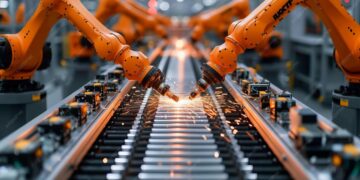
A. Unleashing Industry 4.0: In manufacturing, 5G enables the true “smart factory.” Through mMTC, every machine, tool, and component is connected. URLLC allows for real-time monitoring and precision control of robotic arms and autonomous guided vehicles. This leads to predictive maintenance, optimized supply chains, highly flexible production lines, and significant reductions in downtime and cost.
B. Transforming Healthcare (Telemedicine 2.0): 5G moves telemedicine from simple video consultations to complex remote care. Surgeons can operate on patients thousands of miles away using haptic-feedback robotic systems, enabled by URLLC. Ambulances can become mobile emergency rooms, transmitting high-fidelity patient data and live video to awaiting hospital teams. Continuous remote monitoring of chronic conditions through wearable IoT devices becomes seamless and reliable.
C. Revolutionizing Agriculture (Precision Farming): 5G-powered farms will deploy networks of sensors to monitor soil moisture, crop health, and micro-climates in real time. Autonomous tractors and harvesters can operate with centimeter precision. This data-driven approach maximizes yield, optimizes water and pesticide use, and enhances sustainability.

D. Redefining Logistics and Transportation: Ports and warehouses become hyper-efficient with connected assets. The dream of autonomous vehicles (AVs) hinges on 5G; vehicles must communicate with each other (V2V), infrastructure (V2I), and networks (V2N) instantaneously to navigate safely. This promises to reduce accidents, ease traffic congestion, and transform urban mobility.
E. Creating New Media and Entertainment Paradigms: The combination of eMBB and low latency will make cloud gaming—where processing happens on remote servers indistinguishable from console gaming. Live events can be streamed in volumetric video, allowing viewers to experience concerts or sports from any angle in virtual space. Augmented Reality (AR) overlays will become commonplace for tourism, education, and retail.
The Social and Urban Fabric: Building Smarter, More Inclusive Societies
The impact of 5G extends beyond GDP figures into the daily functioning of cities and communities.
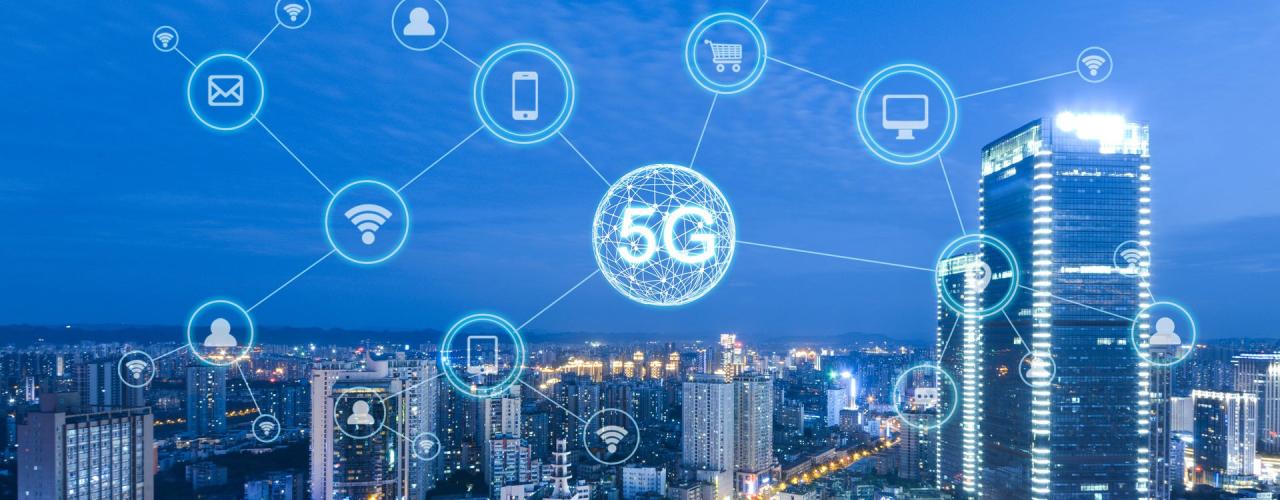
A. The Realization of Smart Cities: 5G is the nervous system for smart cities. Intelligent traffic lights that adapt to flow in real time, smart grids that balance energy distribution efficiently, waste management systems that alert when bins are full, and environmental sensors that monitor air quality all require the dense, reliable connectivity of 5G to function cohesively, leading to improved sustainability, public safety, and quality of life.
B. Bridging the Digital Divide (A Double-Edged Sword): In theory, 5G fixed wireless access (FWA) can provide fiber-like internet to rural and remote areas where laying cable is impractical or too costly, potentially connecting underserved populations. However, the high initial deployment costs risk creating a new “5G divide,” where urban areas advance rapidly while rural regions lag further behind. Proactive policy and investment are crucial to ensure 5G becomes a tool for inclusion, not inequality.
C. The Future of Work and Education: The pandemic accelerated remote work, but 5G will perfect it. High-fidelity, lag-free holographic conferencing and collaborative VR workspaces will make remote interaction as rich as being physically present. Similarly, education can become more immersive and accessible, with students taking virtual field trips to historical sites or interacting with complex 3D biological models in real-time from anywhere.
Navigating the Challenges: The Roadblocks to Global 5G Integration
The path to a globally connected 5G world is fraught with significant technical, financial, and geopolitical hurdles.
A. The Infrastructure Investment Quagmire: Deploying 5G, especially using high-frequency spectrum, requires a massive densification of cell sites potentially a small cell on every streetlight. The capital expenditure for telecom operators is enormous, raising questions about return on investment and potentially leading to higher costs for consumers, particularly in less profitable regions.
B. Spectrum Allocation and Standardization: Radio spectrum is a finite public resource. Governments must carefully allocate appropriate bands for 5G, balancing the needs of different industries and existing users. While global standards bodies have made progress, fragmented approaches in different regions could hinder the seamless global interoperability that maximizes 5G’s potential.
C. Security and Privacy Concerns: The increase in connected devices exponentially expands the “attack surface” for cyber threats. A 5G-connected power grid or hospital is a high-value target. Furthermore, the vast amounts of data generated by IoT devices raise serious privacy questions. Building security and privacy-by-design into the network architecture is non-negotiable.
D. Health and Environmental Debates: Despite consistent scientific evidence from organizations like the WHO that 5G radio waves within regulated limits pose no confirmed health risks, public apprehension persists. This can lead to local opposition to cell site installations, slowing deployment. Environmentally, while 5G can enable efficiencies, the energy consumption of a vastly more complex network and the lifecycle of billions of new devices present sustainability challenges.
Conclusion: A Connected Future, Forged with Intention
The impact of 5G on global connectivity is not a predetermined destiny; it is a trajectory being shaped by the decisions made today. It is a technology of immense power a general-purpose technology akin to electricity or the internet itself. Its potential to drive economic growth, solve complex urban challenges, and improve human well-being is staggering. Yet, it also carries risks of increased inequality, security vulnerabilities, and societal disruption.
The ultimate narrative of 5G will be written by how we manage its integration. It requires unprecedented collaboration between governments to set fair policies and allocate spectrum, private sector investment to build resilient and secure infrastructure, and public dialogue to address concerns and ensure equitable access. The goal must not be connectivity for its own sake, but meaningful, secure, and inclusive connectivity that elevates societies. The 5G revolution is not just about faster phones; it is about building the responsive, intelligent, and interconnected nervous system for our shared global future. Those who understand and adapt to this new landscape will be the architects of the next decade of innovation.